Project Overview
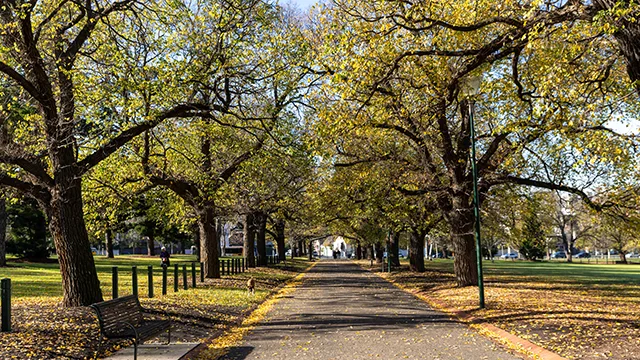
The Yarra Park Master Plan proposes a series of both individual and interlinked projects to ensure the park’s longevity in both its use and function. These projects aim to improve safety, protect and enhance the avenues of trees, make the park’s spaces more functional, and recognise the park’s important significance of place. It also identifies a series of other opportunities that might not result in immediate physical changes to the park, but that once complete will provide important guides, strategies and frameworks for the use and maintenance of Yarra Park in the future.

Consultation
The Yarra Park Master Plan has been shaped by extensive engagement with the local community and key stakeholders since 2023, with more than 800 contributions received through surveys, pop‑ups, meetings, workshops, interviews and emails. Consultation was delivered in three stages:
Stage 1: Foundational consultation (January-March 2023): 536 participants shared their experiences, aspirations and ideas, highlighting priorities such as better lighting, upgraded toilets, more seating and shelters, improved tree health, and enhanced pathways.
Stage 2: Confirmation of direction (April-October 2025): Targeted workshops and meetings with organisations including the City of Melbourne, Wurundjeri Woi‑wurrung Cultural Heritage Aboriginal Corporation, Heritage Victoria, Department of Transport and Planning (DTP), Department of Energy, Environment and Climate Action (DEECA), Office of the Victorian Government Architect (OVGA), Department of Jobs, Skills, Industry and Regions (DJSIR), Yarra Park Advisory Committee and the MCG Trust refined opportunities and ensured projects were feasible and aligned with earlier feedback.
Stage 3: Consultation on the draft Plan (October-November 2025): The wider community and stakeholders were invited to review the draft Master Plan, supporting documents and incorporated document. The purpose of this stage was to validate what had been heard in earlier consultation and demonstrate how that feedback had been reflected in the proposed Master Plan. This ensured final refinements were informed by both community perspectives and stakeholder expertise, while also showing a clear link between engagement outcomes and the plan’s recommendations.
This staged process has fostered transparency ensuring the Master Plan is grounded in the values, needs and aspirations of those who use and care for Yarra Park.
Consultation on the draft Plan
During the final consultation on the draft Yarra Park Master Plan, we heard from over 250 residents and stakeholders via survey and email.
We have summarised the key recurring themes below and outlined how the Yarra Park Master Plan has been updated to respond.
Residents want Yarra Park to remain a passive, heritage‑listed public open space for walking, dog exercise, picnics, informal sport, and quiet enjoyment. There is strong opposition to large‑scale infrastructure, permanent event facilities, or increased commercial use. Concerns were raised about “infrastructure creep” and inadequate past tree management.
Project response:
The Master Plan confirms the park will remain a passive, heritage‑listed space. No grassed areas will be replaced with hard surfaces for car parking or sports courts. A Tree Management and Replacement Strategy will be developed, with Ministerial approval, to guide proactive tree care and protection.
Concerns were raised about “event creep” with more frequent, larger, and longer events and their impact on amenity, heritage, and residential areas. Calls to limit the number of events held, retain permit requirements, and relocate high‑impact events to other venues were communicated. Noise, lighting, and waste management were raised as key issues associated with events.
Project response:
Yarra Park will remain first and foremost a public park, and the Master Plan does not propose to change that. An Event Management Strategy will be prepared in the future that sets clear criteria for activations. Language in the Master Plan has been updated to reflect the park’s primary role as a park. The Master Plan and draft Incorporated Document have been updated to include additional criteria to be addressed during the preparation of the Event Management Strategy. It also includes an additional requirement to consult with key stakeholders and the local community during the preparation of the Event Management Strategy, meaning that there will be further opportunities for members of the community to have their say.
There was opposition to the existing public or event‑day parking on grass due to turf damage, soil compaction, harm to tree roots, and pedestrian safety risks. There were also objections to replacing green space with hard surfaces or adding permanent parking infrastructure, as well as concerns about congestion, ride‑share activity, and road closures during events.
Project response:
A Car Parking Strategy will be developed to review the use of Yarra Park for public and accessible car parking.
The Master Plan does not propose to replace grassed areas with hard surfaces for parking. The Master Plan has been updated to ensure that the intent of the Car Parking Strategy is accurately reflected. The draft Incorporated Document includes a set of criteria that the Car Parking Strategy must address, including alternative parking arrangements, requirements to consult with the local community, and consider ride share alternatives, pick up and drop off locations, and road closures on event-days.
There was strong support for accessibility upgrades, but not at the expense of green space or safety. Hazards from speeding e‑bikes and scooters prompted calls for separated routes and speed enforcement. There was also some opposition to locating toilets near playgrounds due to safety concerns.
Project response:
Improving accessibility and safety is a core principle of the Master Plan. A dedicated ‘Bicycle and Micromobility Circulation and Safety’ initiative will review pathway surfaces, explore options to separate pedestrians and cyclists, and introduce speed humps and other safety measures while retaining the existing pathway network.
The proposed new amenities block will be carefully located near the northern recreation space, with safety and surveillance as top priorities. The block will be subject to Ministerial approval in consultation with Melbourne City Council and the OVGA.
The Event Management Strategy will include specific safety criteria covering lighting, noise, heavy vehicle movements, and waste management.
Yarra Park’s heritage character and Aboriginal cultural sites are central to its identity. There was strong support for protecting areas of cultural heritage sensitivity, avoiding intrusive built form, and integrating Indigenous and non‑Indigenous storytelling in respectful, non‑commercial ways.
Project response:
Celebrating the park’s heritage – both Indigenous cultural heritage and the Park’s post-contact history is a key value underpinning the Master Plan. The opportunities identified aim to strike a balance between preserving, protecting and celebrating the heritage of the park, whilst also making functional and operational improvements to ensure that the park is accessible to as many people as possible.
A further opportunity identified in the Master Plan is the preparation of an Arts and Culture Strategy. The Strategy will be developed to celebrate the Indigenous and non-Indigenous heritage of the park through a range of initiatives.
The Master Plan has been updated to ensure that the intent relating to cultural heritage is clear and that the right balance is struck between preserving, protecting and celebrating Indigenous and non-Indigenous heritage whilst avoiding undue impacts on the character of the park.
There were some concerns about climate change impacts, including heat island effect, reduced water absorption from soil compaction, and biodiversity loss. Support was expressed for expanding tree canopy, native drought‑tolerant planting, and sustainable turf management.
Project response:
Tree management principles have been included in the Master Plan to provide an overarching framework to guide tree management within Yarra Park. These principles would be further expanded on in the preparation of the Tree Management and Replacement Strategy, guiding tree replacement and the planting of additional shade trees. Ensuring climate resilient tree species are prioritised will be a key priority. The Master Plan provides for additional shade tree and understorey planting that would assist in increasing biodiversity within the park.
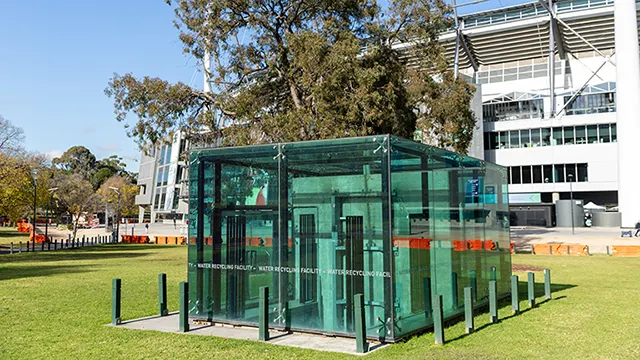
To respond to feedback, a section has been added to the Master Plan to further highlight environmental sustainability initiatives. The MCG will continue to operate and maintain the Water Recycling Facility to secure a reliable, sustainable, long‑term supply of recycled water for Yarra Park.
Respondents support upgrades to lighting, pathways, seating, play equipment and amenities, but emphasise that improvements must be sensitively designed to protect the park’s open character and green space. Concerns were raised about permanent installations, particularly infrastructure in grassed areas, which some see as encouraging commercialisation and large‑scale events. There was also support for replacing temporary barriers with heritage‑sensitive solutions.
Project response:
A core value of the Master Plan is ‘universal design’ ensuring facilities are accessible, inclusive, safe, and well-maintained without compromising the park’s character and use. Opportunities include upgrades to pathways, lighting, the playground and northern recreation space, amenities block and park furniture. All upgrades will require detailed design approval by the Minister for Planning in consultation with the City of Melbourne and the OVGA, ensuring they meet heritage, safety, and accessibility criteria.
Permanent utilities and services infrastructure will be installed below ground to some paddocks to provide power, thereby reducing reliance on noisy generators during activations.
The existing temporary orange barriers will be replaced with permanent, heritage sensitive solutions through a Crowded Places Safety Strategy. The Master Plan has been updated to ensure it clearly delivers accessible, inclusive, and safe facilities in line with community expectations.
Next Steps
The Master Plan, along with supporting reports and draft statutory documentation has been submitted to the Minister for Planning as part of the amendment request. If approved, the amendment will be incorporated into the Melbourne Planning Scheme through gazettal which is expected to take place later in 2026.
We thank all those who provided their feedback. Your feedback has played a vital role in shaping the updated plan, providing important guides, strategies and frameworks for the park’s longevity in its use and function.
We will keep the community informed when the Master Plan and statutory documentation are approved, as well as on future opportunities to provide feedback on the Master Plan opportunities, including during the preparation of the Car Parking Strategy and Event Management Strategy.
Read the Plan
A copy of the Master Plan and amendment documents are available to view and download. Please note that the Master Plan has not been approved at this time and the documents are subject to change.